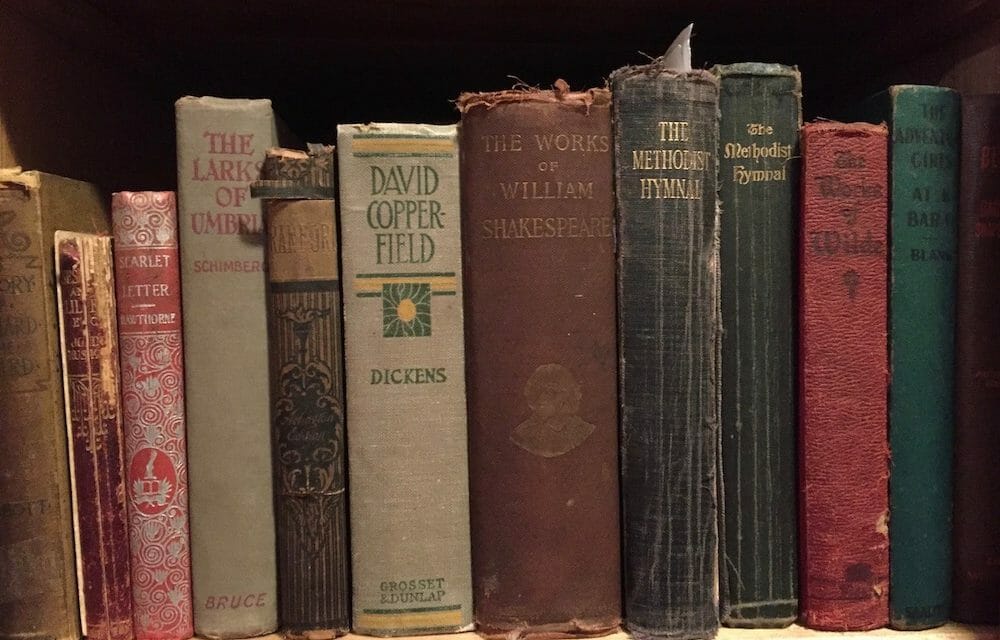
I started yet another Kindle book that immediately got dumped into the “don’t read” collection.
By the end of the first page and a half I was confused. Who was who. Where were we. Who was saying what. Even after reading it twice—that I gave up. If that sounds rash, keep in mind my GoodReads to-read list has forty books on it for the year. That doesn’t include new books that will cross my path.
Reading time is precious.
Writers Need Critiquing
This harshness keeps me ruthless writing every page of my mystery, Cold Cases of Pittsburgh: Murder at the Canalucci Creamery. Repeatedly. I slash and hack. Occasionally I weep as a loved phrase slips into the use-elsewhere file—it adds nothing to the current scene.
I beg reader-friends to be honest and hardhanded if they have to. Writers would rather hear it from friends now than the general public later. Toughen up my fragile ego by berating me for over-used phrases or characters who aren’t quite real.
Writers, editors are our friends! Brutal beta readers are our friends! Those who applaud every pearl we write (well, okay, we LOVE you), are not the ones we should turn to after our final draft is complete. We need those folks who will read our latest creation and say loudly and with strength: HUH? What were you thinking here, and here and over here.
I love praising authors—both new and established. There are times Sandford is too gruesome for me. Connelly … well, his female characters could use some rounding out. Bad on them for skating by. But I will continue to buy because if the balance is a .5 of irritation with them out of a 10 point scale. I can live with that.
New writers, we don’t get that kind of a break.
We need people to say to us: I’m confused on page 22. What is supposed to be happening in chapter 8? And, hey, you’re playing thought-popcorn between your characters in that scene on page 85.
Writers Need You
Critiquing with honesty is on you, the asking is on us, we can’t get the truth from you if we never ask you to read in the first place.
I get requests to read books via Amazon because of the number of reviews I have written. My ratio so far is 443 helpful votes to 271 reviews. I take this honor of writers reaching out quite seriously. But I’ve learned to ask not only my criteria (no gruesome scenes, limited cursing, and only fade-to-black sex, please), but also: What kind of feedback are you looking for?
Often it’s too late for what I want to say because the feedback is: get thyself an editor.* The story is good, but an editor would have helped you make it great. Like the one fellow whose prose was eloquent and enticing, but his characters were standard issue.
Writers self-publishing like crazy these days has put great onus on us readers to be leery before we press that enticing, “buy now with 1-Click” button. I completely understand the desire to launch our work into the world and gain recognition and readership. But publishing too soon is a mistake.
Get an Editor and Heed Their Advice
Beg your readers to red-pen your book. Think about why they’re suggesting edits. Change things that require changing. Don’t lose your voice—don’t let someone talk you into changing the way you sound—that’s you and the part readers will be attracted to. But do listen to the mechanics of the suggestions they make.
Keep a document full of those phrases you become attached to.
Slash the scenes that come across perfectly, but don’t fit in that chapter of that book, stash them in a to-be-used later file. (Scrivener is magnificent for this use–as it is for writing anything, especially novels.)
Be brutal on the front end so we readers can love you on the back end. We want to praise you on Amazon, GoodReads, Facebook, Twitter, our websites … you get the idea.
**
Read: Reading Little Women and, we critique hotels, don’t we?





I joined a writers collaborative several years ago. We call it a safe place to have our children abused. Better to have a small group edit your work than have the world do it for you after the fact
That’s a heck of a good way to put it, Kire. Maybe with that in mind, I can start a MeetUp group with that as our keystone!
Hi Rose, I’m sure a lot of writers don’t seek out critiquing because they haven’t built up a thick enough skin yet to handle the criticism. I’m like you though. I’d much rather get my critiquing beforehand than from public after my book is published.
It is certainly a vulnerability issue. I don’t think that ever becomes easy for humans–maybe even more so for artists. We wear it all on our sleeves (canvases, page…) for everyone to see.
I’ll beta read for you anytime and be honest, but also kind.
I think honest critique, is something that few people feel comfortable with, either giving or receiving. Yet to me, it is highly important. I have no ambition to write a novel but I have received helpful tips on writing my blog from fellow bloggers. I appreciate that so much. I get my books from the library and there seem to be quite a few authors anymore who go on the ‘return to library’ pile after I’ve read only a page or two.
The key, I think, is to find the honest people who want to be truthful with you from a very deep desire to help. We have a nice bloggers group, don’t we?
The Absolute best group – so lucky we found them.
IF I were a writer this would be excellent advice for me. I find it odd that two sisters can be so totally opposite in the writing department. I struggle to put two lines together and she writes entire novels! As a reader I find typos, bad grammar and poorly written novels highly irritating. Keep writing good ones and I’ll keep reading!
Thank you for your nearly weekly proofing of the blog, oh Seester of mine. That help, your input, is very important. We are two odd sisters, aren’t we? HA!
This is really great advice. While it can be difficult to hear criticism about your “baby”, it is necessary if you want anybody other than your mother to read it. I am sure that in this world of easy self-publishing, there are many books that are out before their time. Your advice would save those writers much heartache.
Yep, you got that right, Erica. It is hard to hear the tough stuff, but the tough stuff is the best. My much-loved Seester said to me a few years ago, “You always think your ideas are the best!” Now, of course I still think my ideas are the best, but hearing that from someone I trust with all my heart has also led me to share my ideas differently.
I want to help writers avoid the heartache!
Poor grammar and typos or spelling mistakes is easily the first step to mistrust between reader and writer; I couldn’t agree more.
Right on, Tim. I am immediately turned off by those two things. I cringe when I go through an old blog and see that I made one of those mistakes. Yikes!
Getting people to look at your work with an honest eye is a hard thing to do.
Getting tough reviews is even harder.
I think it is a parenting mentality. We gave life and created it, and we are like modern parents who cannot accept the fact their children are not better than average.
You are right, William. It is a vulnerability thing–to throw our work out there and have someone look at it with a critical eye. Lawrence Block was once criticized for a novel and the person said that whoever wrote Block’s blurb should have written the book. Of course, the blurb was written by Block. Can’t please everyone, but we can ask for people we trust to help us be our best!
I am currently doing the last edit for a friend’s book! How timely is this? I’m categorizing my comments as 1. typos that are obviously needing to be changed, 2. phrases that I find confusing, 3. things I would change but maybe she won’t want to.
Perfect approach, Beth. I am beholden to my college roommate who read Cosmic Cold Cases and spent 3 hours on the phone going through typos/grammar/suggestions with me. WOW! That’s a friend indeed. She has, of course, demanded my first born (novel) as payment. HA! Good luck with your friend’s book.
Enjoyed your honest article. I wasn’t aware of the amount of time writers have to spend reading and reviewing their own work!! I imagined that the ideas and words just came to them!! Never knew that they would have a document listing and storing phrases and scenes for future use.
I store scenes, phrase, characters, places…I have an entire list of proof-read words–the ones I use too often that I have to go through after my crappy first draft and eliminate. Scrivener–the writing software I use and swear by–is perfect for this task. It readily shows you how many times a specific word occurs throughout your manuscript.
Writing is hard work, but writing is never hard, if that makes sense, Mina.
Extremely wise words from a fellow author and a voracious reader who has a bigger dump pile than a keep file. Self-publishing has opened new horizons for writers and also has exposed sophisticated readers to some untold horrors! So I join you in begging serious writers to get editorial help. Even Pat Conroy has an editor!!! But self -pub is falling back into the category of “bad” in spite of the successes of Hugh Howey, Joanna Penn and others who forged such a nice path!
Well stated, Jacquie. I think writers always know there will be bad reviews. Reading is subjective and I what I dislike you may love. But we owe it to ourselves and our readers to put our very best out there in the hopes that why someone dislikes our book stays in the realm of preference rather than poor grammar or weak plots.